


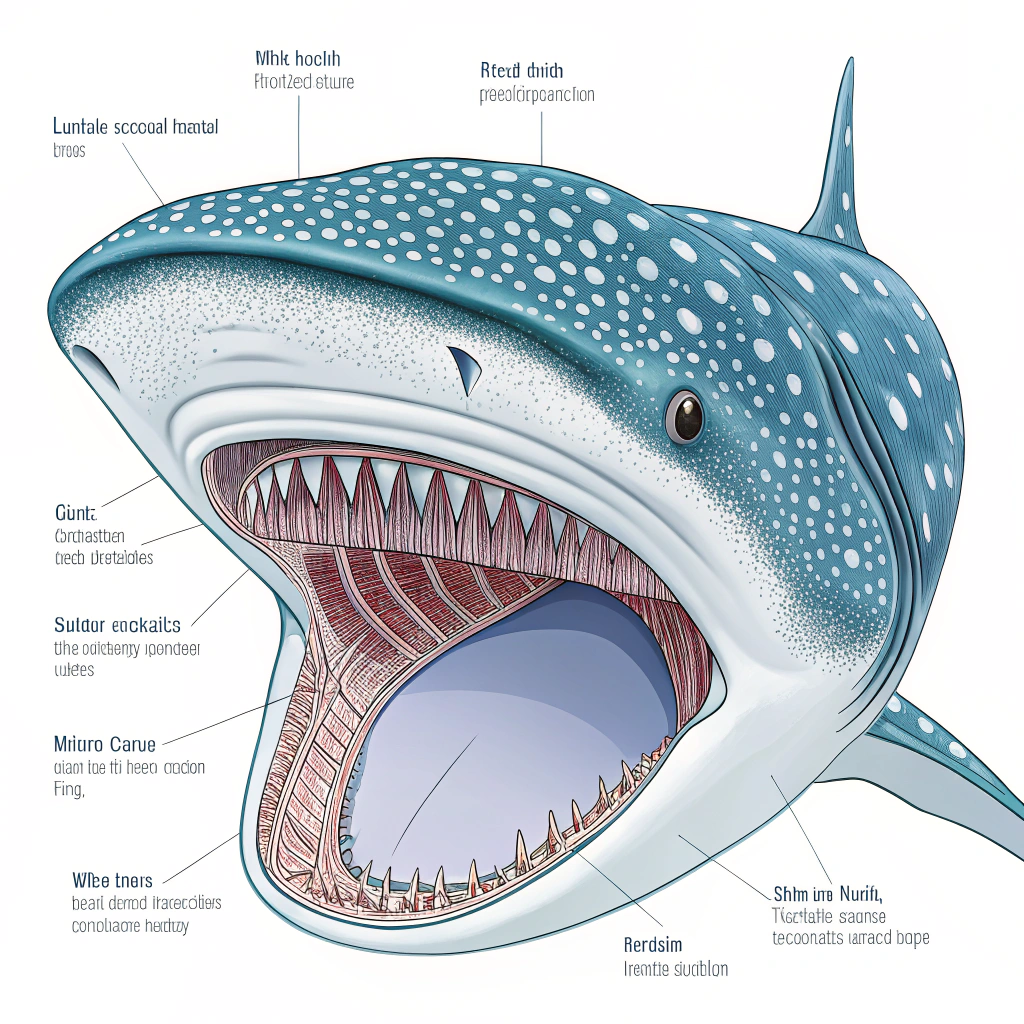
Whale Shark Teeth Overview and Structure
Whale sharks are the largest fish in the ocean, yet their teeth of whale shark are surprisingly tiny and numerous. Each jaw contains hundreds of whale shark teeth, arranged in multiple whale shark tooth rows. These teeth are vestigial, meaning they have lost their primary biting function over evolution. The whale shark jaw structure supports filter feeding rather than active predation, and the whale shark mouth anatomy shows a wide cavity lined with these tiny teeth. Despite their small size, teeth play a role in guiding food toward the whale shark gill rakers, which trap plankton and small fish. The shark dentition in whale sharks is consistent with other filter-feeding adaptations, highlighting a fascinating blend of ancient anatomy and modern feeding strategy.
Interestingly, tiny whale shark teeth are present throughout the mouth and show minimal variation in size. Scientists note that the number of whale shark teeth can reach thousands, with new rows developing continuously as older teeth lose functionality. The whale shark filter pads work alongside these vestigial teeth to ensure efficient feeding, while dermal denticles on whale sharks protect the oral cavity. Understanding whale shark dental facts sheds light on the evolutionary pathway from predatory ancestors to today’s gentle giants, emphasizing how the whale shark tooth function now serves a supportive rather than offensive role.
Types of Teeth Found in Whale Sharks
Whale sharks possess multiple types of teeth, although all are extremely small and vestigial. Most are conical, with blunt tips suited for guiding water and plankton rather than tearing prey. The whale shark tooth anatomy overview shows teeth arranged in whale shark tooth rows extending across both upper and lower jaws. These tiny teeth are uniform and often described as tiny whale shark teeth, emphasizing their minor role in feeding. Scientists studying whale shark dental adaptations highlight that these teeth are different from other sharks, lacking sharpness and strength. They are primarily present for evolutionary continuity and minor manipulation of prey within the whale shark mouth anatomy.
Other teeth include occasional irregular or replacement teeth in vestigial teeth in whale sharks, reflecting ongoing dental development throughout their lives. The tooth size in whale sharks rarely exceeds a few millimeters, and the whale shark filter feeding mechanism relies on the whale shark gill rakers for food capture. Whale shark oral anatomy includes these tiny teeth in rows that, while numerous, serve mainly as structural remnants from predatory ancestors. These dental forms reveal insights into the whale shark evolutionary teeth, showing how evolution has repurposed structures for modern filter-feeding lifestyles.
How Whale Shark Teeth Grow and Regenerate
Whale shark teeth grow continuously, with new rows forming at the back of the mouth as older teeth wear out. This regenerative process ensures the shark dentition in whale sharks remains consistent throughout life. The whale shark jaw structure supports this arrangement, allowing hundreds of whale shark teeth to exist at any given time. Unlike other predatory sharks, these teeth are small and non-functional for biting, reflecting why does a whale shark have teeth questions. Their growth is primarily for replacement rather than feeding.
The whale shark tooth rows extend along both jaws and are supported by connective tissues in the whale shark mouth anatomy. Vestigial teeth in whale sharks may show signs of wear but rarely break or interfere with whale shark filter feeding. Evolutionary studies of whale shark evolutionary teeth confirm the species retained teeth for minor manipulation of prey and structural integrity. Continuous growth illustrates how whale shark teeth differ from other sharks, with regeneration optimized for non-predatory purposes. Understanding this growth pattern helps researchers explain teeth on whale shark eyeballs, a rare but documented curiosity in dental anatomy studies.
Function of Whale Shark Teeth in Feeding
The primary feeding method of whale sharks is filter feeding, making their teeth of whale shark largely vestigial. Teeth guide water and plankton into the mouth but do not actively chew food. The whale shark filter pads and whale shark gill rakers capture and retain prey, while teeth provide minor support. Studies of shark dentition in whale sharks highlight the shift from predatory function to passive feeding roles.
Whale shark tooth function ensures the integrity of the oral cavity and directs food efficiently. While the tiny whale shark teeth are too small to bite, they assist in minor food manipulation. Observations of whale shark feeding anatomy confirm that teeth work in tandem with filter pads, emphasizing whale shark filter feeding as the dominant feeding mechanism. The whale shark dental facts provide insights into how these adaptations evolved, and whale shark oral anatomy studies show teeth are now auxiliary tools supporting modern feeding behavior.
Whale Shark Feeding Mechanisms and Diet
Whale sharks feed mainly on plankton, krill, and small fish using whale shark filter feeding methods. Water enters the mouth, passes over whale shark gill rakers, and plankton is trapped. Whale shark filter pads enhance food capture efficiency, while whale shark teeth and feeding behavior play a minimal, supportive role. The mouth structure ensures continuous water flow, allowing sustained feeding.
Studies of whale shark feeding anatomy reveal the integration of vestigial teeth with whale shark jaw structure to guide water. Tiny whale shark teeth do not damage prey but may slightly adjust plankton positioning. The whale shark mouth anatomy ensures an effective feeding pathway, while whale shark oral anatomy supports enormous volumes of water and food. These adaptations reflect why whale sharks have tiny teeth and how their dentition aligns with whale shark filter feeding mechanism, enabling survival in nutrient-rich marine environments.
Comparison with Other Shark Teeth
Unlike predatory sharks, whale shark teeth are tiny and vestigial. Shark dentition in whale sharks is vastly different from species with large, cutting teeth. Whale shark teeth vs other sharks comparisons highlight evolutionary adaptation from hunting to passive filter feeding. The whale shark tooth anatomy overview shows uniformity, in contrast with serrated predator teeth.
Other sharks use teeth for capturing and tearing prey, but tiny whale shark teeth lack such capability. Studies of whale shark dental adaptations demonstrate how vestigial teeth persist despite reduced feeding function. Whale shark evolutionary teeth show how species diverged from predatory relatives, retaining teeth for minimal assistance in whale shark filter feeding. This comparison clarifies how whale shark teeth differ from other sharks while providing insight into their evolutionary purpose.
Scientific Studies on Whale Shark Dentition
Researchers have conducted detailed studies on whale shark teeth to understand whale shark dental evolution. Tooth arrangement, structure, and number are documented to explore how vestigial teeth affect feeding. Studies also cover whale shark tooth rows and shark dentition in whale sharks to map evolutionary changes.
Scientific observation shows whale shark tooth function is minimal, focusing on structural guidance. Analysis of tiny whale shark teeth and whale shark oral anatomy confirms their secondary role. Fossil records, combined with modern data, illuminate whale shark evolutionary teeth development. Research also explores whale shark dental adaptations and whale shark filter feeding mechanism, providing insights into feeding ecology and the shift from predatory ancestry.
Evolutionary Significance of Whale Shark Teeth
The evolution of whale shark teeth illustrates adaptation from predation to filter feeding. Whale shark evolutionary teeth are vestigial, highlighting why does a whale shark have teeth despite minimal biting function. Shark dentition in whale sharks reflects ancient feeding strategies, while modern whale shark filter feeding has supplanted predatory use.
Tiny whale shark teeth provide minor structural support. Whale shark jaw structure retains rows of teeth, offering evidence of evolutionary continuity. Studies of whale shark dental adaptations and whale shark oral anatomy demonstrate natural selection preserving teeth for passive feeding efficiency. Understanding this helps answer how whale shark teeth differ from other sharks and underscores the importance of dentition in evolutionary biology.
Teeth Size, Shape, and Distribution in Whale Sharks
Teeth are small, conical, and uniform in teeth of whale shark. Tooth size in whale sharks rarely exceeds a few millimeters. Whale shark tooth rows are spread across upper and lower jaws, creating dense but non-functional patterns.
Tiny whale shark teeth support whale shark filter feeding indirectly. Their distribution aligns with whale shark oral anatomy, ensuring water and prey are directed toward whale shark gill rakers. Studies on whale shark dental facts highlight variations in tooth shape and count. These structures demonstrate whale shark evolutionary teeth adaptations while showing how vestigial teeth remain integral to mouth structure and passive feeding efficiency.
Whale Shark Teeth Fossils and Historical Records
Fossil evidence of whale shark teeth shows ancestral predatory traits. Whale shark teeth in fossil record indicate gradual reduction in size over time. Modern tiny whale shark teeth resemble vestigial structures, confirming evolutionary shifts from biting to whale shark filter feeding.
Records detail whale shark evolutionary teeth and the persistence of whale shark tooth rows through centuries. Comparative studies of whale shark dental adaptations and fossils illuminate shark dentition in whale sharks history. Fossils show that while size decreased, teeth retained minimal structural function, aligning with whale shark oral anatomy requirements and feeding efficiency in contemporary oceans.
Unique Adaptations of Whale Shark Teeth
Whale shark teeth are adapted for minimal intervention in feeding. Tiny whale shark teeth are vestigial but maintain mouth structure. Whale shark tooth function supports whale shark filter feeding by guiding plankton and water efficiently.
Whale shark dental adaptations include continuous growth of whale shark tooth rows and alignment with whale shark jaw structure. Teeth work with whale shark filter pads and whale shark gill rakers to maximize feeding efficiency. Whale shark evolutionary teeth provide insights into how natural selection favors non-predatory adaptations while preserving ancestral structures.
Conservation and Study of Whale Shark Mouth Anatomy
Conservation research emphasizes understanding whale shark oral anatomy and teeth of whale shark for ecological insights. Studies on whale shark jaw structure reveal adaptations supporting filter feeding, aiding conservation strategies.
Monitoring whale shark dental facts and whale shark tooth rows helps track growth, health, and environmental impact. Whale shark teeth and feeding behavior provide important data for habitat protection. Conservation programs integrate studies of tiny whale shark teeth, whale shark filter feeding, and whale shark evolutionary teeth to ensure survival of these gentle giants while enhancing scientific knowledge.
Interesting Facts About Whale Shark Teeth
Whale shark teeth are fascinating for their tiny size and vestigial nature. Tiny whale shark teeth can number in the thousands yet serve little for biting. Whale shark tooth rows illustrate evolutionary adaptations from ancient predators.
Despite their small size, whale shark teeth used for feeding subtly assist in directing water and plankton toward whale shark gill rakers. Vestigial teeth in whale sharks highlight evolutionary history, while whale shark filter feeding dominates dietary intake. Shark dentition in whale sharks offers insight into the unique adaptation of these ocean giants, blending evolutionary legacy with modern survival strategies.
Introduction
The teeth of whale shark are among the most fascinating features of the ocean’s largest fish. Though tiny and vestigial, these whale shark teeth reveal much about the species’ evolution and feeding habits. Unlike predatory sharks, whale sharks rely on whale shark filter feeding to capture plankton and small fish, making their teeth largely supportive rather than functional. Their arrangement in multiple whale shark tooth rows allows efficient guidance of food toward the gill rakers. Understanding the teeth of whale shark provides insight into evolutionary adaptations, highlighting how these gentle giants have retained ancestral features while thriving as passive filter feeders in diverse marine ecosystems.
Conclusion
The study of teeth of whale shark highlights their evolutionary significance and role in feeding efficiency. These tiny whale shark teeth may be vestigial, yet they support the remarkable whale shark filter feeding mechanism, guiding plankton toward the gill rakers. Their presence in numerous whale shark tooth rows reflects evolutionary continuity and adaptation to a passive diet. By examining the whale shark oral anatomy, researchers gain insight into how these gentle giants balance structural features with ecological needs. Ultimately, the teeth of whale shark offer a window into evolutionary history and provide essential knowledge for understanding feeding behavior, marine biology, and species conservation.
FAQ’s
Do whale sharks have teeth?
Yes, whale sharks have teeth, but they are tiny and vestigial. They are not used for biting or chewing, as whale shark feeding relies on filter feeding instead of grasping prey.
How many teeth does a whale shark have?
A whale shark has thousands of tiny teeth, arranged in multiple whale shark tooth rows. However, these teeth are very small and serve little functional purpose in feeding.
What do whale shark teeth do?
The teeth of whale shark are mainly vestigial. They do not chew food but may help slightly in guiding plankton and small fish toward the whale shark mouth anatomy for filter feeding.
Are whale shark teeth different from other sharks?
Yes, unlike predatory sharks, whale shark teeth are tiny, numerous, and non-functional. They are evolutionary remnants, while other sharks use their teeth for hunting and tearing prey.
Can whale sharks bite with their teeth?
No, despite having thousands of teeth, whale sharks cannot bite effectively. Their teeth are vestigial and serve no significant purpose for feeding, as their diet relies entirely on plankton and small organisms filtered through whale shark filter feeding.
