


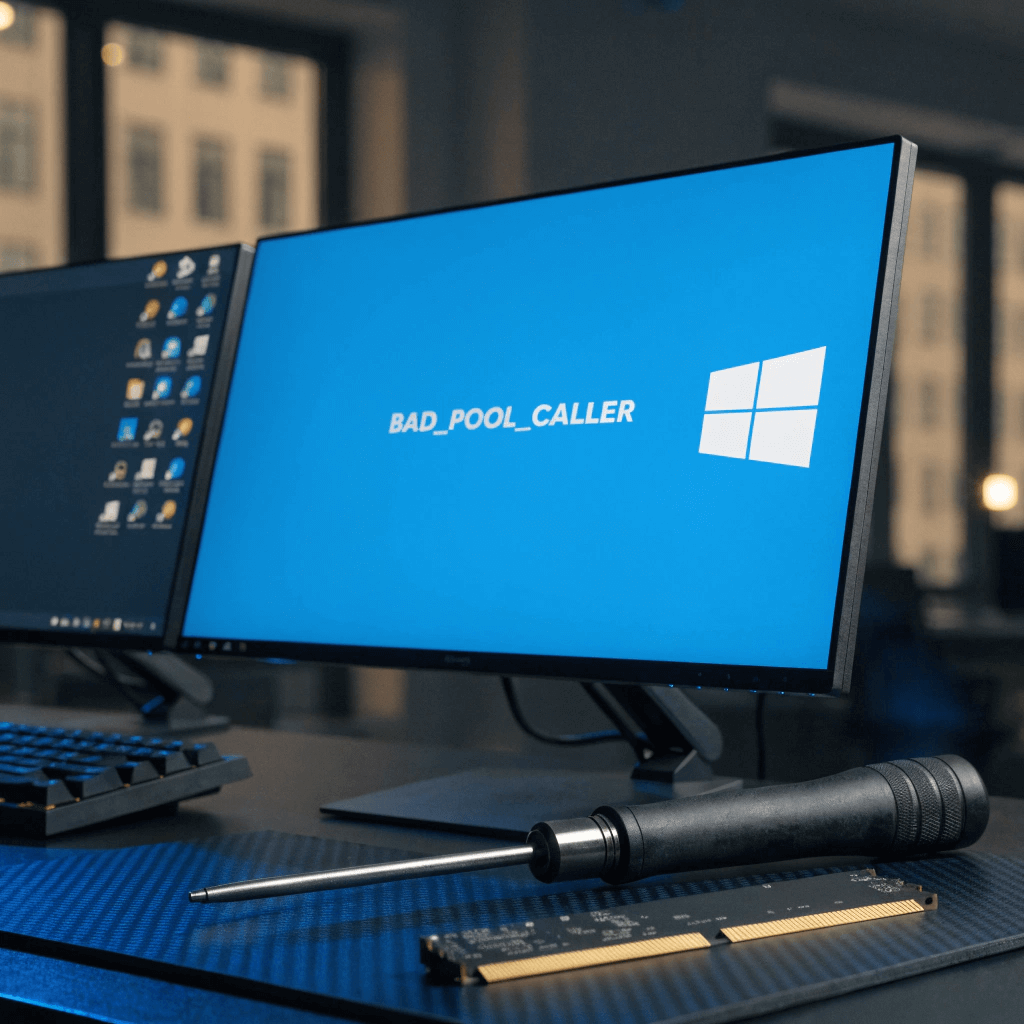
What is Bad Pool Caller Blue Screen?
The bad pool caller blue screen is a common Windows error that appears when the system encounters a serious issue while managing memory. This BSOD Windows 10 error occurs when the operating system detects that a process has made an invalid request from the memory pool, often referred to as a memory pool request failed. Users will notice their computer halting and showing a blue screen with the stop code 0x000000C2, which indicates a kernel pool memory crash. This error can happen in both Windows 10 and bad pool caller Windows 11, and it prevents the computer from running normally until the issue is resolved.
Typically, the Windows blue screen of death caused by this error is sudden and can occur while installing software, updating Windows, or even during normal system use. It is essential to understand that this error is closely related to faulty device drivers, memory issues, or corrupt system files. If ignored, it may lead to repeated crashes and potential data loss, making early diagnosis crucial.
Why Bad Pool Caller Happens
Understanding why does bad pool caller happen requires examining the system’s memory and drivers. One primary cause is faulty device drivers, which may fail to allocate memory properly and lead to the bad pool caller error. Another reason is hardware problems such as defective RAM or faulty hardware Windows crash, which can trigger BSOD memory management errors. Sometimes, this error appears bad pool caller after Windows update, as updates may conflict with existing drivers or software, leading to a bad pool caller with kernel memory corruption.
Other triggers include overclocking settings or incompatible software. For example, bad pool caller while gaming is often caused by demanding graphics processes overwhelming the memory pool. Similarly, installing new applications without checking compatibility may result in bad pool caller after installing software. Frequent BSODs every time the computer boots, noted as bad pool caller BSOD every boot, signal persistent underlying problems that require prompt attention.
How to Check Your Memory (RAM)
To diagnose bad pool caller memory pool explained, the first step is to check the computer’s RAM. Running a RAM memory diagnostic helps detect memory corruption or faulty modules that may trigger a bad pool caller error Windows troubleshooting scenario. You can use the built-in Windows Memory Diagnostic tool or third-party utilities to test memory integrity. Bad pool caller memory diagnostic steps often involve rebooting the system and letting the diagnostic tool scan for errors automatically.
If memory issues are detected, replacing the faulty RAM is usually the most effective solution. For persistent issues, combining this with system file checks using DISM and SFC tools can repair corrupted system files that may have caused corrupt system file repair errors. Regular memory checks are particularly helpful if the computer experiences bad pool caller and laptop crash scenarios or unexpected system halts during intensive tasks.
Updating or Fixing Drivers
Driver problems are among the top reasons for the bad pool caller blue screen. Users must update Windows drivers or roll back recently installed ones using a driver rollback guide to resolve conflicts. Outdated or incompatible drivers can trigger kernel pool memory crash events and lead to bad pool caller Windows 11 fix guide requirements. Regularly updating graphics, network, and chipset drivers helps prevent BSOD Windows 10 error occurrences.
In some cases, specific devices like printers, USB hubs, or graphics cards may require manual driver updates. Running bad pool caller and driver update fix ensures that all hardware interacts properly with the memory pool. If a recent driver causes repeated bad pool caller after driver installation, removing or reinstalling it often restores system stability. This step is crucial to prevent BSOD memory management errors in the future.
Using System Tools to Repair Windows
Windows provides several tools to repair the underlying causes of bad pool caller blue screen errors. DISM and SFC tools are effective in fixing corrupted system files and ensuring the operating system remains stable. Using the command prompt, running DISM /Online /Cleanup-Image /RestoreHealth followed by sfc /scannow can address corrupt system file repair issues and stop memory pool request failed errors.
Another helpful tool is analyze minidump files, which allows users to examine crash reports generated during a bad pool caller error minidump analysis. These files reveal which drivers or processes caused the crash. Performing these steps alongside Windows safe mode troubleshooting often resolves the bad pool caller BSOD every boot problem without requiring a complete system reinstall.
Removing Problematic Software
Certain applications can trigger bad pool caller after installing software errors. Programs that heavily access memory or conflict with existing drivers may cause kernel pool memory crash issues. Uninstalling such software using standard Windows tools or third-party uninstallers ensures that the system remains stable. This is especially effective if bad pool caller while gaming or during high-memory usage scenarios occurs.
Monitoring software installations and keeping applications updated helps prevent future bad pool caller error Windows troubleshooting events. Tools that provide driver rollback guide features alongside uninstall options can restore stability. Regularly checking installed programs and removing suspicious or incompatible software is a proactive method to mitigate bad pool caller blue screen incidents.
Clean Boot and BIOS Reset
Performing a clean boot is a strategic way to identify what causes bad pool caller errors. By disabling all non-essential startup programs, you can determine if software conflicts are triggering the bad pool caller blue screen. Pairing this with a BIOS reset safe boot ensures that hardware settings do not interfere with memory allocation. Clean booting is particularly effective when bad pool caller after Windows update occurs.
Resetting BIOS to default settings eliminates overclocking issues that might trigger bad pool caller disable overclocking scenarios. A systematic clean boot combined with BIOS adjustments often stops BSOD memory management errors and stabilizes bad pool caller Windows 11 systems, especially after hardware or software changes.
Using System Restore or Resetting PC
System restore can reverse changes that caused a bad pool caller blue screen, such as driver updates or software installations. Restoring to a previous point often resolves bad pool caller after driver installation errors. If restore points are unavailable, resetting the PC while keeping personal files intact offers a thorough solution.
Resetting the operating system also addresses faulty device drivers and corrupt system file repair issues, bringing back normal functionality. Using this method carefully ensures bad pool caller BSOD every boot incidents do not recur. Always back up data before performing system restores or resets to safeguard against data loss.
How to Read the Blue Screen Message
The Windows blue screen of death displays critical information during a bad pool caller blue screen. Observing the stop code 0x000000C2 and related memory addresses can provide clues about the underlying cause. For example, mentions of drivers or hardware indicate that faulty hardware Windows crash or bad pool caller error Windows troubleshooting steps are necessary.
Analyzing minidump files helps translate complex codes into understandable causes, offering guidance for bad pool caller error minidump analysis. Recognizing whether the error occurs after updates, installations, or during heavy tasks like gaming clarifies whether the issue is bad pool caller while gaming, bad pool caller after Windows update, or a memory problem.
Tips to Prevent Future Crashes
Regularly checking memory with RAM memory diagnostic tools prevents bad pool caller memory diagnostic steps from becoming critical. Updating drivers proactively using update Windows drivers routines ensures bad pool caller and driver update fix issues remain minimal. Avoiding overclocking and monitoring software installations reduce bad pool caller disable overclocking risks.
Creating restore points before major updates, performing Windows safe mode troubleshooting for anomalies, and keeping the system clean from unnecessary applications help prevent bad pool caller blue screen occurrences. Regular maintenance and prompt repairs minimize BSOD memory management errors and extend hardware lifespan, ensuring smooth operation of both Windows 10 and bad pool caller Windows 11 systems.
Conclusion
The bad pool caller blue screen is a serious yet manageable Windows issue. Understanding what is bad pool caller stop code and using diagnostic tools like DISM and SFC tools or RAM memory diagnostic steps can prevent repeated crashes. Addressing faulty device drivers, removing incompatible software, and maintaining proper system updates keeps your computer stable and responsive.
By following structured troubleshooting steps, including clean boot, BIOS adjustments, and system restore, users can resolve bad pool caller error Windows troubleshooting situations effectively. Awareness and preventive measures reduce future BSOD Windows 10 error incidents, providing a reliable and smooth computing experience for both Windows 10 and bad pool caller Windows 11 users.
Frequently Asked Questions (FAQ)
How can I fix bad pool caller blue screen? Using RAM memory diagnostic, updating drivers, and running DISM and SFC tools often fixes the issue without reinstalling Windows.
Why does bad pool caller happen after a Windows update? Updates can conflict with existing faulty device drivers, causing kernel pool memory crash or memory pool request failed errors.
Can gaming trigger bad pool caller errors? Yes, bad pool caller while gaming happens when graphics-intensive processes overload memory pools.
Do I need to reset BIOS for this error? Performing a BIOS reset safe boot helps if overclocking or hardware settings trigger bad pool caller disable overclocking issues.
Is it necessary to uninstall software for prevention? Removing incompatible programs addresses bad pool caller after installing software errors and prevents recurring BSOD memory management errors.
